


Location:
Great Salt Lake, Utah
Clients:
Utah Division of Water Resources and Utah Division of Water Quality
Partner:
Hansen, Allen & Luce (HAL)
Our Expert:
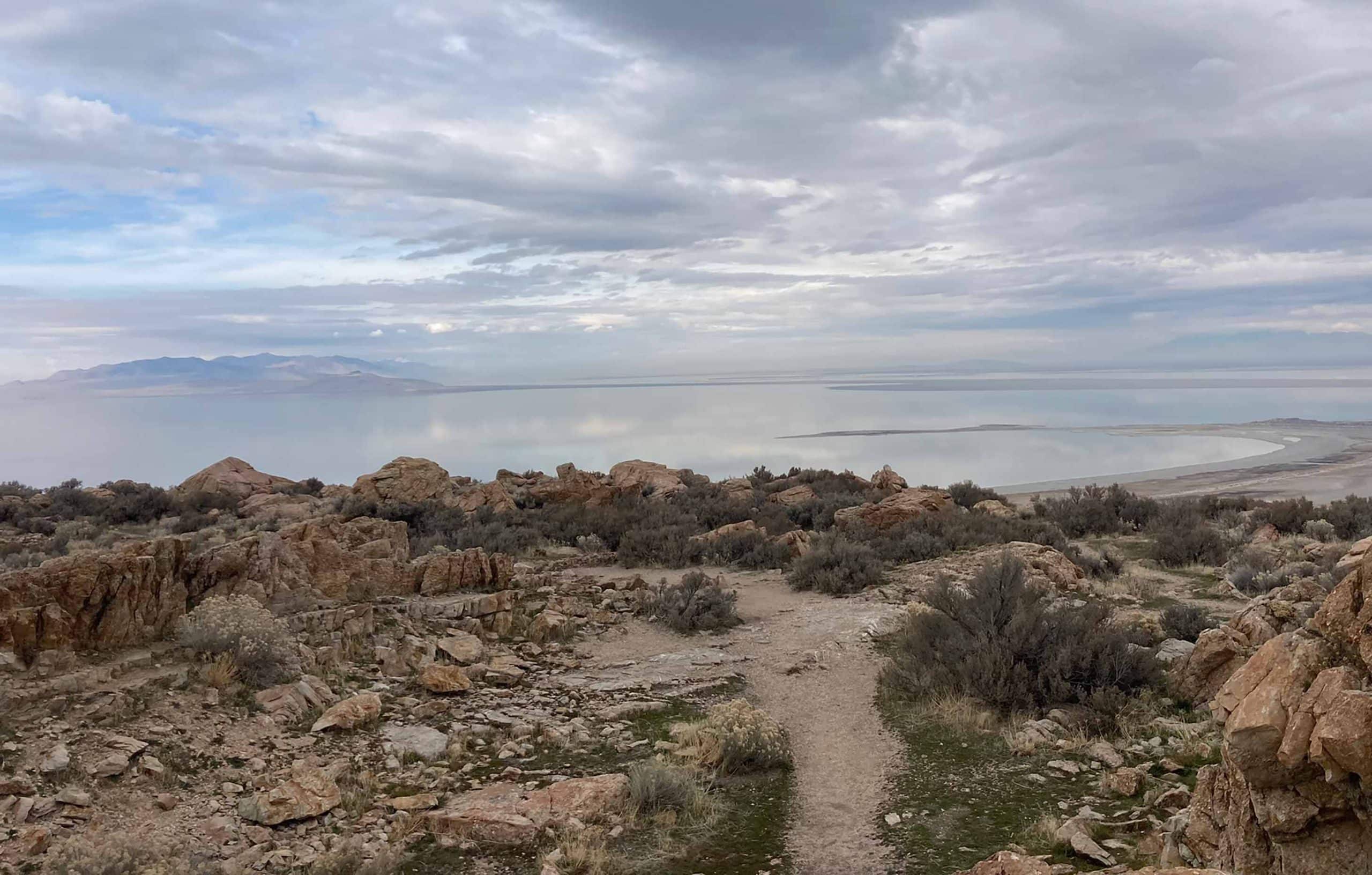
Working with Hansen, Allen & Luce (HAL) for the Utah Division of Water Resources, LimnoTech helped address questions raised about the impact of stormwater management on flows to the Great Salt Lake. This study examines the potential impact of Low Impact Development (LID) practices on the water balance in one of Utah’s most critical ecosystems.
The Challenge
The Great Salt Lake (GSL) has faced historically low water levels, prompting urgent questions about how urban development affects its water budget. In response, the Utah Legislature passed HB429, mandated “…the completion of a wide-scale Great Salt Lake Watershed Integrated Water Assessment” (1). A key concern was whether post-construction stormwater permit requirements—specifically those involving LID—might reduce the volume of water reaching the lake.
The State of Utah needed a scientifically grounded evaluation of how LID practices that promote infiltration and evapotranspiration might impact both surface and groundwater flows to the lake. With increasing urbanization, understanding these dynamics is critical to balancing ecological health, water quality, and sustainable growth.
The Outcome
To address this challenge, Hansen, Allen & Luce (HAL) and LimnoTech developed a robust modeling framework that linked surface water and groundwater systems. The team simulated three scenarios: current baseline conditions, future development without LID, and future development with LID. These models quantified stormwater flows under each scenario, tracking both direct runoff and subsurface flows to the lake.
The findings revealed that while future development increases total runoff to the GSL, implementing LID significantly alters the flow pathways. LID reduces surface runoff but enhances groundwater recharge, ultimately still contributing to the lake through slower, subsurface routes. For example, per 100 acres of development, surface runoff to the lake was 71 acre-feet/year without LID, compared to 42 acre-feet/year with LID. These insights provide a nuanced understanding of how LID affects the lake’s water balance, providing a foundation for informed policy and planning decisions.
By delivering a methodology for evaluating LID impacts, the study equips Utah’s water managers with the tools to guide sustainable development while protecting the Great Salt Lake’s future.
(1) Hansen, Allen & Luce (HAL) and LimnoTech. 2023. HB 429 Great Salt Lake Stormwater Study. Prepared for the State of Utah Division of Water Resources. HAL Project No.: 420.03.100.
For more details on the Great Salt Lake Study, check out the links below:
• Final Report: HB 429 Great Salt Lake Stormwater Study
• Fact Sheet: Great Salt Lake Stormwater Study
• Website: Great Salt Lake Integrated Plan
Projects
-
Flood Protection Studies, Washington, DCClimate Change Resiliency & Adaptation Collection System Modeling Hydraulics & Computational Fluid Dynamics Permits & Standards Urban Wet Weather Water Resources Modeling
-
 View Image
Read about this project: Green Infrastructure Planning & Design at the Historic Congressional Cemetery, Washington, DC
Green Infrastructure Planning & Design at the Historic Congressional Cemetery, Washington, DCClimate Change Resiliency & Adaptation Urban Ecology & Naturalization Urban Wet Weather Water Resource Investigation & Management
View Image
Read about this project: Green Infrastructure Planning & Design at the Historic Congressional Cemetery, Washington, DC
Green Infrastructure Planning & Design at the Historic Congressional Cemetery, Washington, DCClimate Change Resiliency & Adaptation Urban Ecology & Naturalization Urban Wet Weather Water Resource Investigation & Management -
View Image
Read about this project: Community-Based Organization Capacity Building Initiative for the Chesapeake Bay Trust
Community-Based Organization Capacity Building Initiative for the Chesapeake Bay TrustClimate Change Resiliency & Adaptation Urban Ecology & Naturalization Urban Wet Weather Water Resource Investigation & Management
-
Anacostia River Corridor Restoration Plan, Washington, DCBiological/Habitat Assessment & Management Climate Change Resiliency & Adaptation Urban Wet Weather Water Resource Investigation & Management Waterway & Ecosystem Restoration
-
Great Salt Lake Stormwater Study, UtahClimate Change Resiliency & Adaptation Groundwater Supply & Remediation Urban Wet Weather Water Resource Investigation & Management Water Resources Modeling
-
Biodiversity Benefit Accounting (BioBA)Biological/Habitat Assessment & Management Climate Change Resiliency & Adaptation Sustainable Agriculture Water Resource Investigation & Management Water Stewardship
-
Water Quality Benefit Accounting (WQBA)Agricultural Environmental Services Climate Change Resiliency & Adaptation Sustainable Agriculture Water Resource Investigation & Management Water Stewardship
-
View Image
Read about this project: Programmatic and Technical Support for Coca-Cola’s Water Replenish Program
Programmatic and Technical Support for Coca-Cola’s Water Replenish ProgramAgricultural Environmental Services Climate Change Resiliency & Adaptation Environmental Data & Information Management Environmental Software Application Development Water Resource Investigation & Management Water Resources Modeling Water Stewardship Waterway & Ecosystem Restoration
-
H2Oquirrh – Southwest Waterways Visioning PlanGroundwater Supply & Remediation Urban Ecology & Naturalization Waterway & Ecosystem Restoration
-
View Image
Read about this project: Upper Wolf Creek and Ottawa-Stony Watershed Management Plans, Michigan
Upper Wolf Creek and Ottawa-Stony Watershed Management Plans, MichiganAgricultural Environmental Services Water Quality Monitoring Water Resource Investigation & Management Water Resources Modeling