


Location:
Washington, DC
Clients/Partners:
DC Department of Energy and Environment (DOEE), Anacostia Watershed Society, Historic Congressional Cemetery, National Fish and Wildlife Foundation (NFWF), Chesapeake Bay Trust
Our Expert:
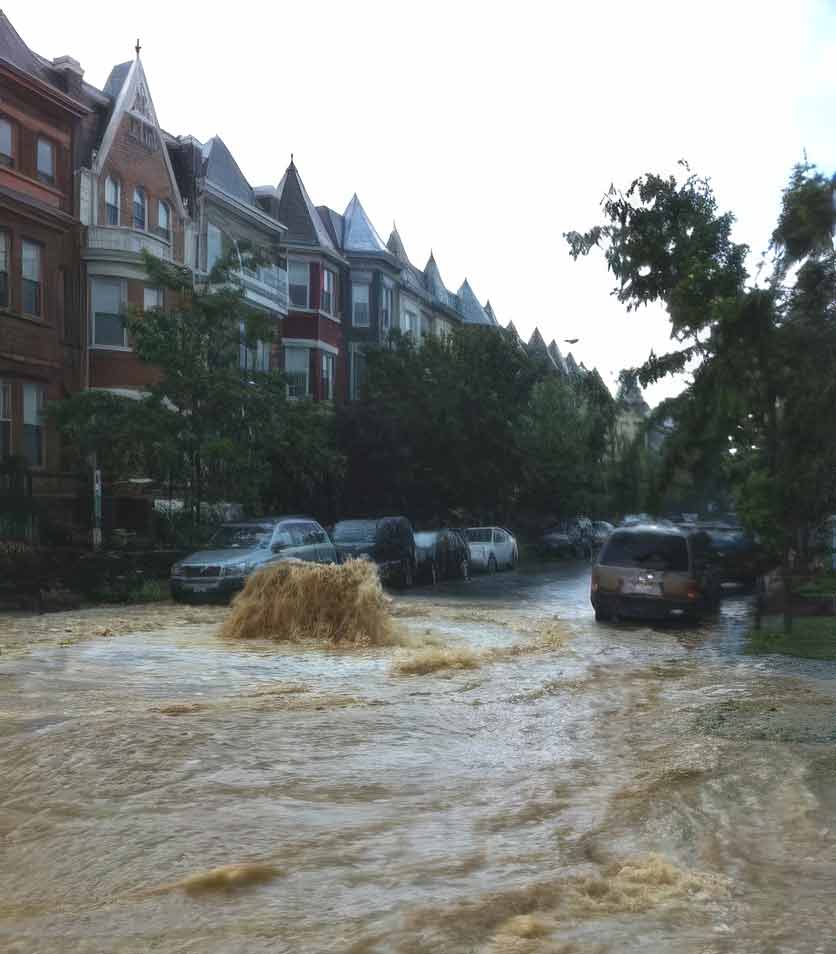
The Historic Congressional Cemetery is a vital public green space and community center, facing challenges related to climate resiliency due to heavy rainfall, aging infrastructure, and its proximity to the Anacostia River. LimnoTech received a grant from the Department of Energy and Environment (DOEE) to develop and pilot-test a green infrastructure community education and participatory planning methodology. LimnoTech and Anacostia Watershed Society (AWS) then partnered to pilot test the methodology at the Cemetery.
How We Helped
LimnoTech received a grant from the Department of Energy and Environment (DOEE) in Washington, DC, to develop and pilot-test a green infrastructure community education and participatory planning methodology. The project aims to help community members better understand the benefits of green infrastructure beyond stormwater management (collectively known as “co-benefits”), invest in community knowledge, and elevate the community’s ability to participate in planning and design.
LimnoTech was interested in determining whether increased community knowledge of green infrastructure led to increased support for green infrastructure projects and elevated the community’s ability to participate in planning and design. In partnership with the Anacostia Watershed Society (AWS), LimnoTech developed a methodology focused on investing in community members’ education and familiarity with green infrastructure and its co-benefits. The methodology was heavily supported by a literature review focused on green infrastructure co-benefits, environmental justice, and community engagement. LimnoTech and AWS then co-led a pilot test of the methodology at the Congressional Cemetery in southeast Washington, DC.
Individuals who live in the area surrounding the Cemetery, who frequent the Cemetery, and who live in regions of DC that have historically experienced environmental injustice (Wards 7 and 8) were sought out for this project. The emphasis on environmental justice was essential to the project team, DOEE as a grant outcome, and the Cemetery as they look to engage equitably with the broader community. Community members were compensated for their time and expertise.
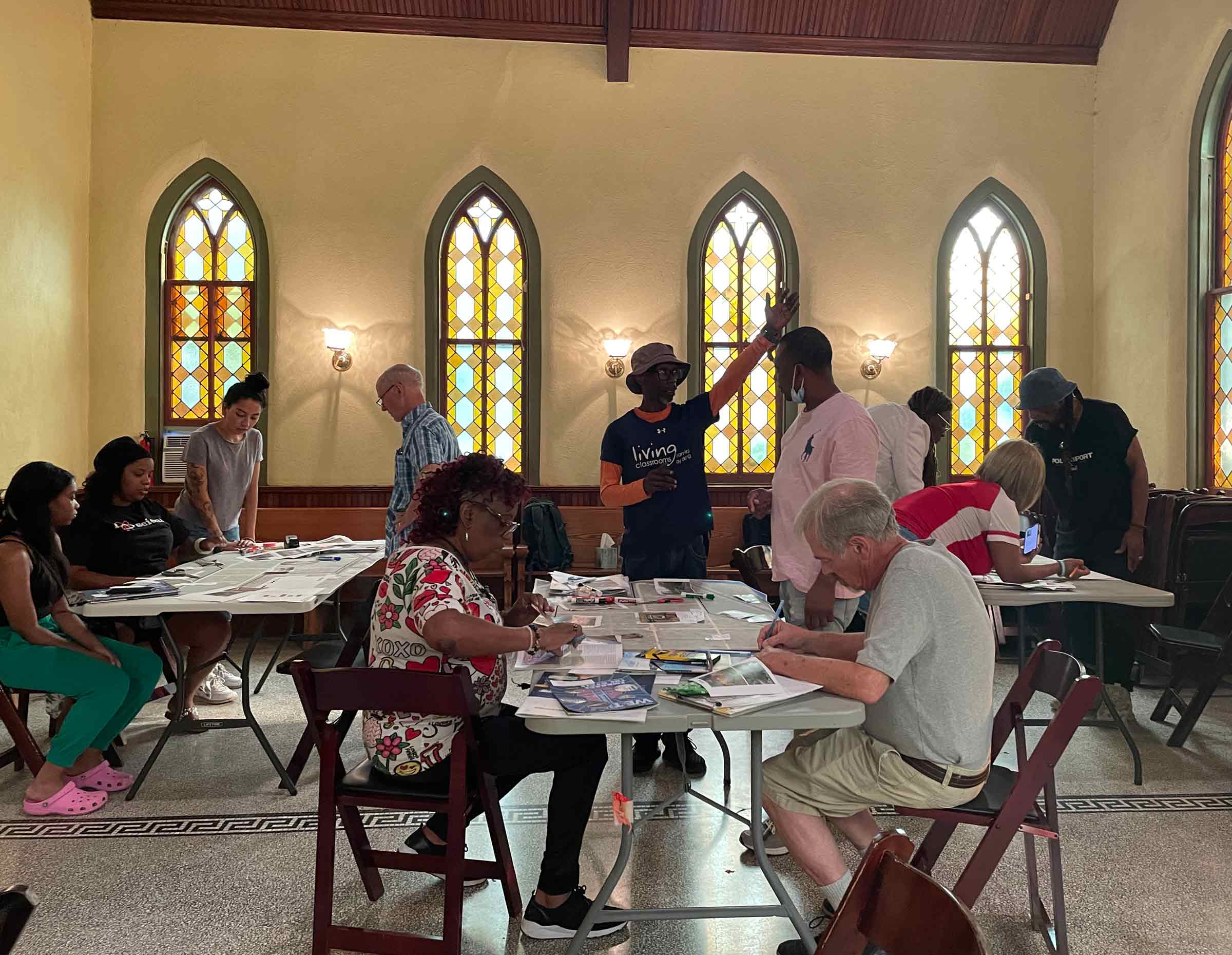
The methodology outlined a series of workshops that LimnoTech and AWS facilitated, consisting of a boat tour of the Anacostia River, a green infrastructure walking tour, an interactive mobile mapping activity to identify areas for improvement, and a visioning exercise using paper maps of the Cemetery. The workshops included facilitated discussions on perceptions of green space, the co-benefits of green infrastructure, maintenance, green gentrification, and pathways to addressing environmental concerns in one’s neighborhood, and highlighted the connections between the Cemetery and the city’s African American history, helping participants form a deeper connection to the space. The workshops resulted in a set of community recommendations for green infrastructure retrofits in the Cemetery.
The Outcome
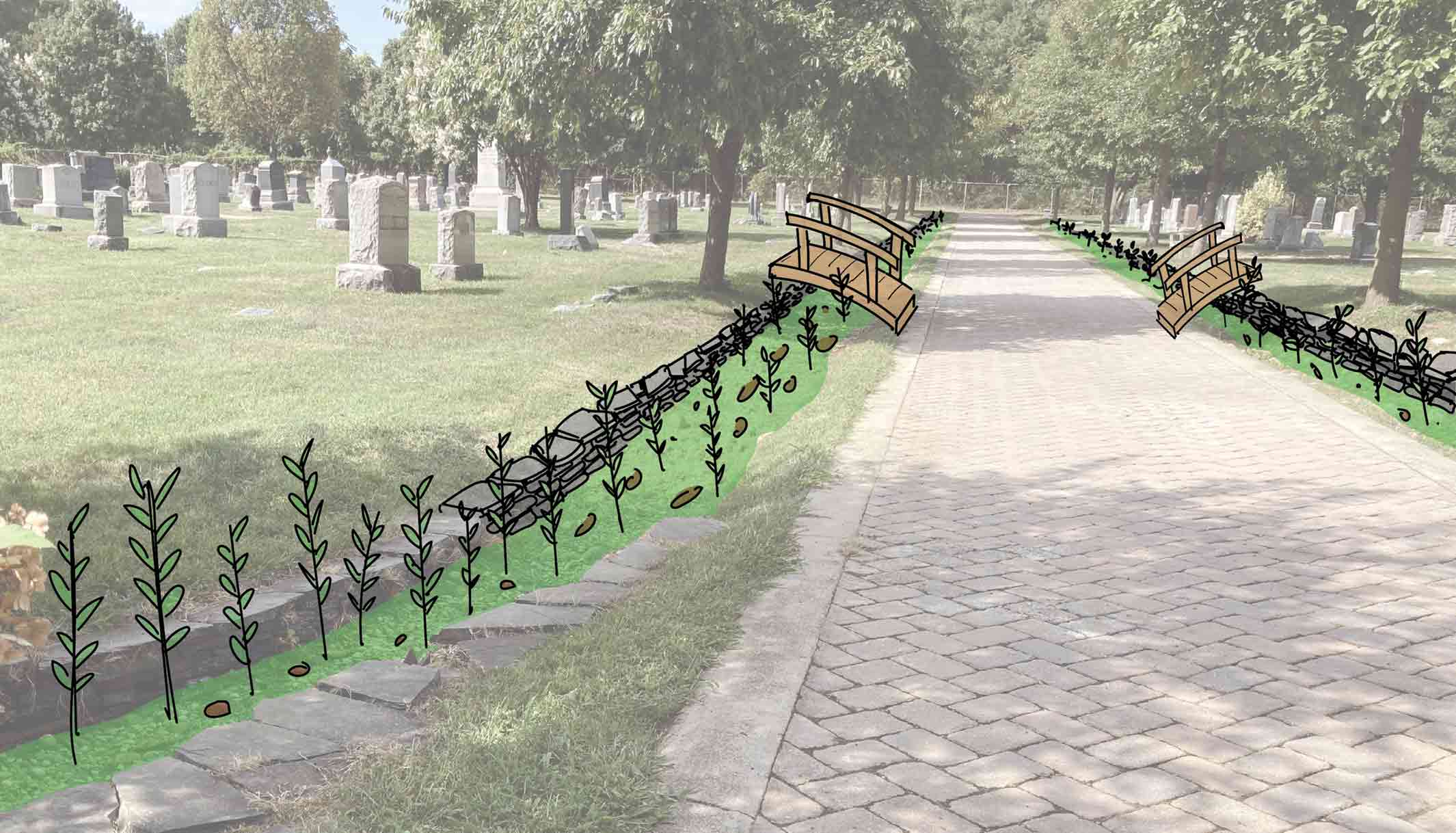
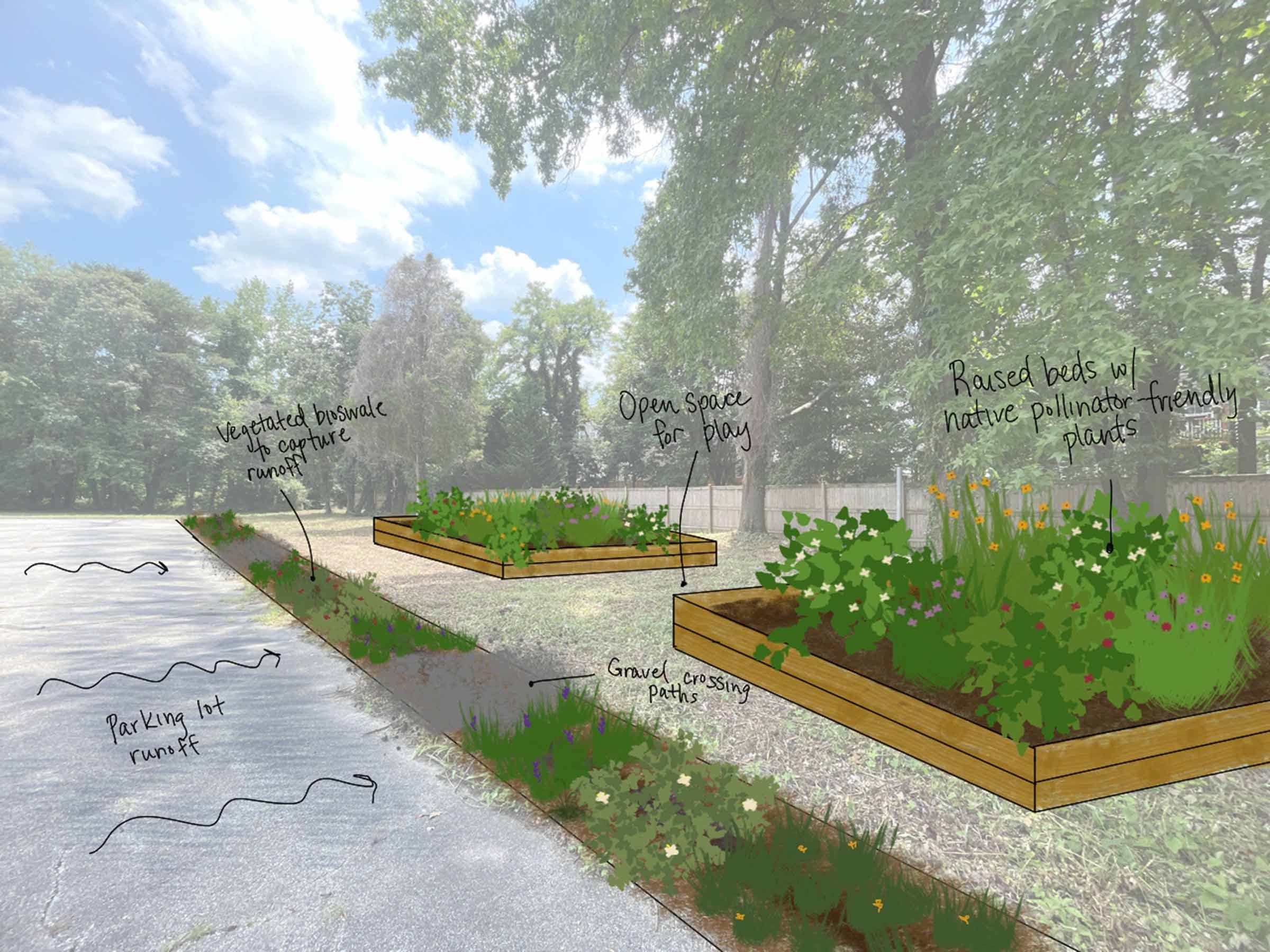
LimnoTech and AWS secured additional funding to advance the designs of these community-driven green infrastructure projects at Congressional Cemetery. LimnoTech developed a series of concept sketches based on the community visioning and presented them at a public feedback session to ensure that the designs honored the Cemetery’s historic character and present-day uses. In close coordination with the Cemetery’s master planning team, LimnoTech is further advancing the process by developing 100% engineering and design drawings for the green infrastructure practices.
LimnoTech and AWS consider the project to be a major success. Participants were fully engaged in the workshop series. They came away with a stronger understanding of green infrastructure, confidence in advocating for the features they wanted in their neighborhoods, and a sense of community with one another. The project established a strong foundation for a community-driven set of green infrastructure projects to be implemented at the Congressional Cemetery.
Projects
-
Flood Protection Studies, Washington, DCClimate Change Resiliency & Adaptation Collection System Modeling Hydraulics & Computational Fluid Dynamics Permits & Standards Urban Wet Weather Water Resources Modeling
-
 View Image
Read about this project: Green Infrastructure Planning & Design at the Historic Congressional Cemetery, Washington, DC
Green Infrastructure Planning & Design at the Historic Congressional Cemetery, Washington, DCClimate Change Resiliency & Adaptation Urban Ecology & Naturalization Urban Wet Weather Water Resource Investigation & Management
View Image
Read about this project: Green Infrastructure Planning & Design at the Historic Congressional Cemetery, Washington, DC
Green Infrastructure Planning & Design at the Historic Congressional Cemetery, Washington, DCClimate Change Resiliency & Adaptation Urban Ecology & Naturalization Urban Wet Weather Water Resource Investigation & Management -
View Image
Read about this project: Community-Based Organization Capacity Building Initiative for the Chesapeake Bay Trust
Community-Based Organization Capacity Building Initiative for the Chesapeake Bay TrustClimate Change Resiliency & Adaptation Urban Ecology & Naturalization Urban Wet Weather Water Resource Investigation & Management
-
Anacostia River Corridor Restoration Plan, Washington, DCBiological/Habitat Assessment & Management Climate Change Resiliency & Adaptation Urban Wet Weather Water Resource Investigation & Management Waterway & Ecosystem Restoration
-
Great Salt Lake Stormwater Study, UtahClimate Change Resiliency & Adaptation Groundwater Supply & Remediation Urban Wet Weather Water Resource Investigation & Management Water Resources Modeling
-
Biodiversity Benefit Accounting (BioBA)Biological/Habitat Assessment & Management Climate Change Resiliency & Adaptation Sustainable Agriculture Water Resource Investigation & Management Water Stewardship
-
Water Quality Benefit Accounting (WQBA)Agricultural Environmental Services Climate Change Resiliency & Adaptation Sustainable Agriculture Water Resource Investigation & Management Water Stewardship
-
View Image
Read about this project: Programmatic and Technical Support for Coca-Cola’s Water Replenish Program
Programmatic and Technical Support for Coca-Cola’s Water Replenish ProgramAgricultural Environmental Services Climate Change Resiliency & Adaptation Environmental Data & Information Management Environmental Software Application Development Water Resource Investigation & Management Water Resources Modeling Water Stewardship Waterway & Ecosystem Restoration
-
H2Oquirrh – Southwest Waterways Visioning PlanGroundwater Supply & Remediation Urban Ecology & Naturalization Waterway & Ecosystem Restoration
-
View Image
Read about this project: Upper Wolf Creek and Ottawa-Stony Watershed Management Plans, Michigan
Upper Wolf Creek and Ottawa-Stony Watershed Management Plans, MichiganAgricultural Environmental Services Water Quality Monitoring Water Resource Investigation & Management Water Resources Modeling