


Lessons Learned from Alliance for Water Stewardship (AWS) Implementation
LimnoTech has helped clients across a range of sectors and regions obtain Alliance for Water Stewardship (AWS) certifications for their sites. Along the way, we’ve picked up several important lessons about the certification process and how to effectively and efficiently meet all requirements.
By Ben Roush, Environmental Scientist and Nate Jacobson, Environmental Scientist (Ann Arbor, MI)
January 14, 2026
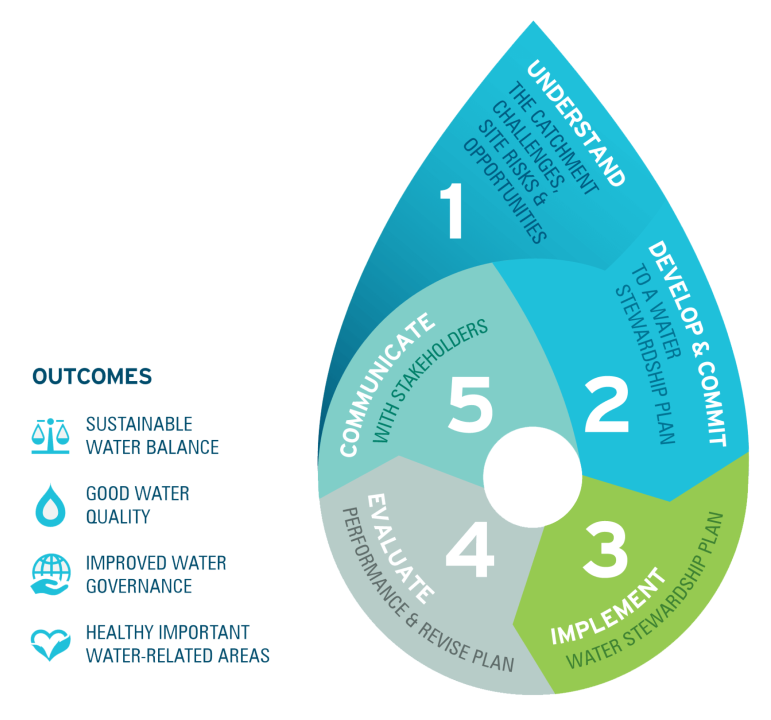
The Alliance for Water Stewardship (AWS) Standard is implemented around the world to assist businesses and organizations that use water to be more conscious of how their operations impact water resources, to better understand the shared water challenges where they operate, to engage with stakeholders who may share those challenges, and to take tangible steps to be better water stewards within and outside of the site. LimnoTech has helped clients across various industries attain AWS Standard certification for their sites. We have learned some important lessons about AWS implementation along the way and would like to take a moment to share a few of those lessons.
Securing Site Team Buy-in
The first step in ensuring a successful application of the Standard’s framework and eventual certification is to make sure that site personnel understand the AWS certification process, its benefits, and why it’s important. For some organizations, corporate leaders may have initially come across the AWS Standard and promoted it, but the site team, where certification will occur, may not always see the value in the process right away. The AWS process involves detailed data collection from site personnel. The site team will likely be the ones providing data and implementing local actions, so having them invested in the process is critical to its timely and successful completion. Consultants who help sites gain certification, like LimnoTech, can describe the AWS process in detail, explain why it’s important to consider water outside of a site’s fence line, and guide the site team through the needs of the certification process.
Staying Ahead of the Game
The AWS process requires extensive site data collection and watershed research to meet all core criteria. The Standard may seem overwhelming to newcomers to the process. However, maintaining a detailed plan for completion, including regular meetings with the site team, will help make tasks seem less daunting. LimnoTech has found that workshops with site personnel to cover key topics are helpful, while organizing certification materials into a slide deck enables collaborative work. Maintaining the organization of the materials needed for each indicator and promptly asking personnel to clarify any questions ensures that all certification deliverables are provided on schedule. This also allows sufficient time for the site team to review materials before a certification audit, ensuring that all parties are aligned and all topics are covered thoroughly.
Casting a Wide Stakeholder Net
A critical component of the AWS certification process is engaging external stakeholders to discuss shared water challenges in the site’s watershed and brainstorm opportunities. This engagement step is often a challenge for the site team, who may not have contacts with water-related professionals outside their immediate water or wastewater providers. In order to obtain certification, it is important to consider a wide range of stakeholders. Some may be more obvious, like regulatory agencies and local governments. However, it will also likely be beneficial to reach out to neighboring properties, peer companies, or NGOs active in the area. In LimnoTech’s experience, even though it may be difficult and time-consuming, connecting with a variety of water-related organizations provides immense value to the AWS process and beyond.
Making the Grade
A site’s certification with the AWS Standard sends a credible, evidence-based message internally and externally that the organization is serious about being a good water steward. LimnoTech’s extensive experience with the Standard means we’ve seen many different roadblocks arise in the certification process. We understand how to overcome them, and we can help clients reach their water stewardship goals with the proper application of the AWS Standard.
Reach out to Ben Roush at broush@limno.com or Nate Jacobson at njacobson@limno.com to learn more about how LimnoTech supports companies with their water stewardship goals and initiatives, including AWS Standard implementation.
This article is the eleventh in a series of articles authored by LimnoTech staff on water stewardship and AWS. Links to the other water stewardship articles in this series are provided below:
- The Alliance for Water Stewardship Standard – Framing a Decade of Water Stewardship
- Understanding and Engaging Water-Related Stakeholders
- Assessing Water-Related Risk As A Foundation For Stewardship
- Success Strategies for Developing a Site Water Stewardship Plan within the AWS Standard Framework
- Strong Site Teams Lead To Successful Water Stewardship
- Replenish Projects and Volumetric Benefits within the Framework of the AWS Water Stewardship Standard
- Setting the Catchment Context
- Supporting the Implementation of Nature-Based Solutions
- WASH Benefits Accounting Framework
- Synergies Between Two Complementary Frameworks: WQBA and AWS
Follow us on LinkedIn and check the Insights & Perspectives page on our website for more information and updates.
Ben Roush joined LimnoTech in April 2022 as an Environmental Scientist. Ben has worked in water resources and environmental sciences for ten years and in environmental consulting since 2019. His primary responsibilities include supporting clients with corporate water stewardship program implementation and volumetric water benefit accounting. Ben has experience working with corporate, non-profit, and government sector clients. His background and expertise include AWS Standard application, volumetric water benefit quantification, water risk assessments, watershed modeling, stakeholder engagement, water footprint analyses, watershed assessments, surface and groundwater monitoring, water quality permit compliance, and soil/groundwater remediation.
Nate Jacobson is an Environmental Scientist with expertise in corporate water stewardship and sustainability, biological services, stormwater management, and data management and analysis. Since joining LimnoTech in 2015, Nate has worked on a wide variety of projects for many different client sectors, including project scoping and volumetric water benefit quantification, water risk assessments, water stewardship plan development, and stakeholder mapping. Nate is a Professionally Credentialed Specialist Consultant for applying the AWS Water Stewardship Standard and has worked both in implementing and auditing the Standard.
The content herein is the author’s opinion and not published on behalf of the Alliance for Water Stewardship (AWS). The author holds an AWS Professional Credential and this piece of publishing helps fulfil their Continuing Contribution Units requirements. For more information about AWS or the AWS Professional Credentialing Program please visit https://a4ws.org/.