


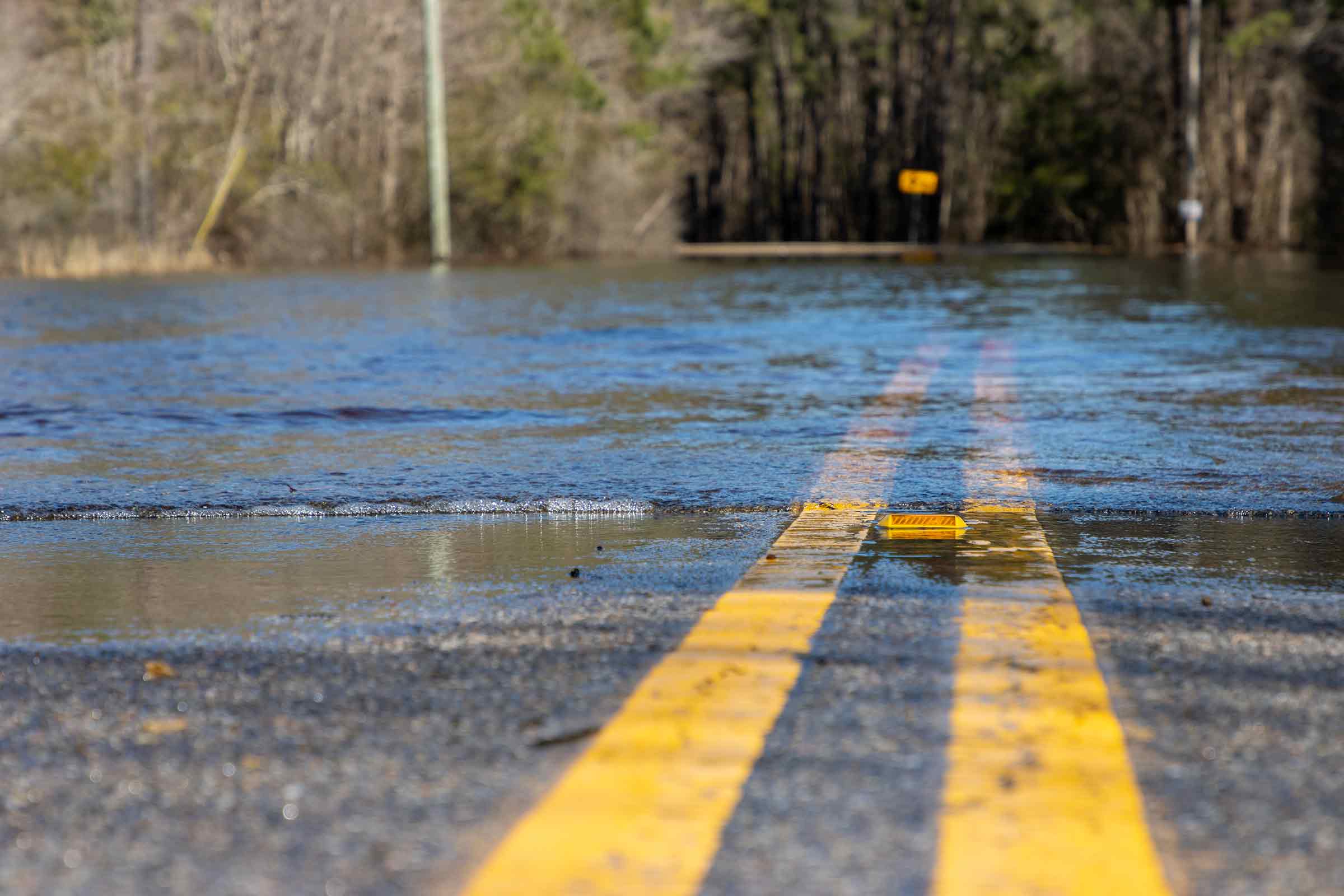
Facing the Deluge: Creating Flood Resilient Communities
Designing our world with resilience as the ultimate goal encourages us to think on a broader systems level to build and nurture thriving ecosystems and better places to live.
By Anouk Savineau, Senior Water Resources Engineer and Business Operations Officer (Washington, DC), Tim Schmitt, Principal and Senior Environmental Scientist (Washington, DC), and Tim Dekker, PhD, PE, CEO & President (Ann Arbor, MI)
February 2, 2026
What is Resiliency?
“Resiliency” is a term often heard in the water infrastructure sector. It describes a desired aspirational state that offers an inherent promise of a better way of planning and building for the future than the current status quo. The definition of resiliency within the stormwater and flood sector has evolved over time from the narrow description of “recovery to where things were after a destructive event” to a more encompassing description that includes the ability to anticipate, prepare for, withstand, recover from, and adapt to disruptive events.
Creating Healthy Environments and Stronger Communities
Why should we care about resilience? We should care because designing our world with resilience as the ultimate goal encourages us to think more broadly, planning on a systems level to build and nurture thriving ecosystems and better places to live. Healthy environments and stronger communities are mutually reinforcing concepts that can be achieved through a combination of gray infrastructure, nature, and nature-based solutions to make our communities safer, cleaner, and more resilient.
Designing our world with resilience as the ultimate goal encourages us to think more broadly, planning on a systems level to build and nurture thriving ecosystems and better places to live.
We recently heard a story from a community member in a town where LimnoTech is studying local flooding problems and developing a flood resilience plan. The community member was recounting what happened one afternoon several summers ago, when over four inches of rain fell in just a couple of hours. It didn’t take very long for water to start accumulating in low-lying areas – depressions in the roadways and in basements at the bottoms of hills – and spilling out of storm sewer pipes and channel beds.
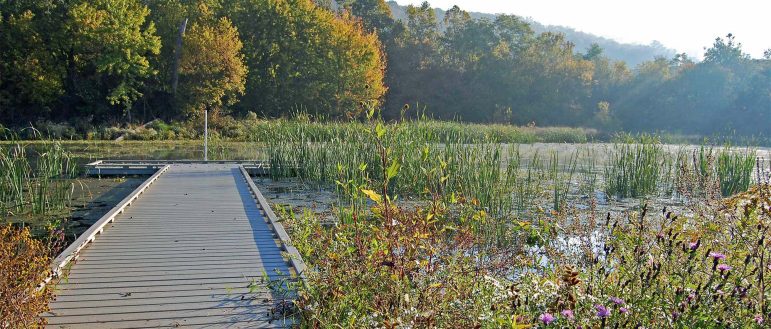
Some of the excess water found its way downstream to a local stormwater pond, filling it up and spilling over into a nearby natural wetland area. The storm blew over as suddenly as it had started, and soon all the ponding water began to disappear, except in the wetland. The standing water in the wetland had roughly doubled in area compared to “normal.” And it stayed like that for several days as the water seeped slowly into the groundwater table.
The community grew impatient with the standing water in the wetland, calling it a nuisance and worrying about mosquitoes. But seen through the lens of natural function, the wetland is an example of resiliency, with the ability to anticipate and prepare for extreme rainfall, and then to withstand, recover from, and adapt to this disruptive event. The wetland lay in wait for the storm, protecting the community by absorbing the impact of the storm and storing excess runoff. The wetland continued to thrive as it slowly percolated excess water back into the ground, and recovered after the storm, providing important ecological benefits, such as habitat for pollinators and recreational opportunities to the community. This type of story is common across different communities facing increased rainfall and localized flooding.
Working With Nature
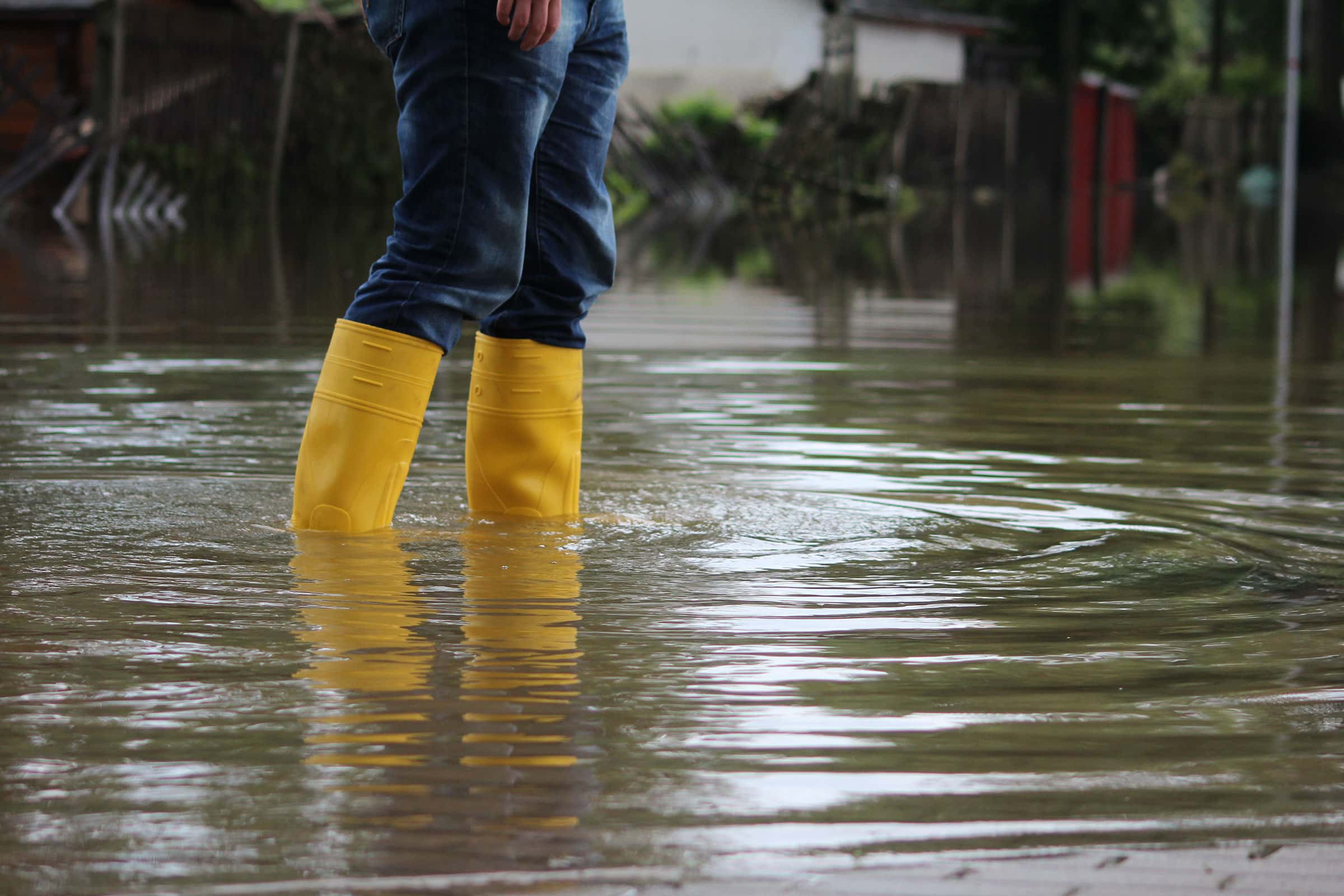
The escalating frequency and intensity of extreme weather, particularly heavy rainfall, means that our traditional stormwater and flood control infrastructure is no longer sufficient to protect property and human lives. Resilience in this context is not just about building bigger pipes. Building large-scale infrastructure can be disruptive and expensive, even if it is feasible, and larger infrastructure will not mitigate every potential event. Instead, resiliency is about creating systems that can anticipate, prepare for, withstand, recover from, and adapt to. It’s about working with nature rather than fighting against it.
This way of thinking is growing and changing the way we plan and design projects. LimnoTech has had the opportunity to provide programmatic and strategic support to the Engineering With Nature (EWN) program at the US Army Corps of Engineers. The principles of Engineering With Nature provide a useful framework for creating resilient solutions.
These are to:
- Apply the latest science and engineering to develop resilient solutions. Learn from the past to build a more resilient future.
- Leverage natural processes to develop resilient solutions. Learn from nature to enhance performance, provide multiple benefits, minimize resources, and extend project lifespan.
- Embrace and build solutions that provide multiple benefits.
- Use collaboration and commit to working with stakeholders and partners to develop resilient solutions.
For many communities, the road to resilience requires imagination, tough decisions, inclusive community participation, and substantial financial investments, with a focus on long-term returns on investment and ultimate benefits. It often means coming to terms with the fact that our current infrastructure is no longer adequate or compatible with the climate we live in, and that the future climate regime is inherently uncertain and unpredictable.
Resilient solutions require imagination to design at a scale larger and more complex than an individual sewer, a residential lot, or a neighborhood pond. It requires re-engineering our infrastructure to be smarter and more adaptable, and to provide more than just a single benefit. It requires providing a place for water to accumulate intentionally, a safe-to-flood place just like the wetland, where excess water causes minimal or no damage, and even creates benefits like needed nutrients or sediments to create a thriving ecosystem.
Resilient solutions require imagination to design at a scale larger and more complex than an individual sewer, a residential lot, or a neighborhood pond.
As our colleagues wrote in an article last year on urban ecology in the built environment, our cities haven’t cracked the code on how to truly integrate natural processes into the daily life of a city. We have a vision of cities that are greener, cleaner, and just better, but as a society, we struggle with how to get there.
What’s Next?
At LimnoTech, we’ve always sought to solve the most challenging problems of our time, and flooding undoubtedly ranks high as a challenging problem for many communities. In a series of upcoming articles, we’ll go deeper into how we help communities develop resilient flood solutions by:
- Article No. 2 – Listening and soliciting input and feedback from the communities we work with, affected by flooding (anticipated in Winter 2026)
- Article No. 3 – Leveraging the latest science and engineering to better understand the triggers that lead to flooding under a changing climate and a static infrastructure system (anticipated in Spring 2026)
- Article No. 4 – Pinpointing critical vulnerabilities in a community’s infrastructure assets using modeling and monitoring (anticipated in Summer 2026)
- Article No. 5 – Developing and maximizing resilient solutions that incorporate natural elements to address system vulnerabilities and provide community co-benefits (anticipated in Fall 2026)
Recommended Resources
If you would like to read additional resources related to resiliency, EWN, and nature-based solutions, we recommend the following:
- US Army Corps of Engineers. Engineering With Nature (EWN) Program. https://ewn.erdc.dren.mil/. Last accessed 12/23/2025.
- US Chamber of Commerce. How Costly Natural Disasters Impact Communities—And How To Build Resilience. https://www.uschamber.com/environment/heres-how-costly-natural-disasters-impact-communities-and-how-to-build-resilience. Last accessed 12/23/2025.
- US Climate Resilience Toolkit. https://toolkit.climate.gov/. Last accessed 12/23/2025.
- US EPA. Regional Resilience Toolkit: https://www.epa.gov/smartgrowth/regional-resilience-toolkit. Last accessed 12/23/2025.
- US Federal Emergency Management Agency. Building Community Resilience with Nature-Based Solutions: A Guide for Local Officials. https://www.fema.gov/sites/default/files/2020-07/fema_bric_nature-based-solutions-guide_2020.pdf. Last accessed 12/23/2025.
- Naturally Resilient Communities: Using Nature to Address Flooding. https://nrcsolutions.org/. Last accessed 12/23/2025.
Reach out to Anouk Savineau at asavineau@limno.com, Tim Schmitt at tschmitt@limno.com, or Tim Dekker at tdekker@limno.com to learn more about how LimnoTech supports communities with resiliency planning and flooding-related challenges.
Follow us on LinkedIn and check the Insights & Perspectives page on our website for more information, updates, and new articles.
Anouk Savineau, PE, is an Officer and Senior Water Resources Engineer at LimnoTech. She has over 25 years of experience in urban watershed and waterway restoration and management, including for water quality improvements and flood management. She also provides communities with regulatory compliance and permitting support. Anouk has experience in various hydrologic, hydraulic, hydrodynamic, and water quality modeling tools, as well as in data management and geospatial analysis. Anouk is a licensed professional engineer in Washington, DC, Virginia, and Maryland.
Tim Schmitt is a Principal and Senior Environmental Scientist with over 30 years of experience centered on NPDES and MS4 program support; watershed studies; stormwater management, monitoring, and BMPs; TMDL studies and load reduction planning and analysis; and Clean Water Act compliance. During his tenure at LimnoTech, Tim has provided project and task management for multiple large and complex projects for local, state, and federal clients. His recent focus has been on integrating water quality with water quantity issues and understanding how projects can address both needs simultaneously.
Timothy Dekker, PhD, PE, is the President and CEO of LimnoTech. Tim is an Environmental and Water Resources Engineer with expertise in urban stormwater management and urban waterway remediation and restoration. Tim has led scientific studies and projects throughout North America, describing the dynamics of surface water, sediments, and groundwater systems, assessing and mitigating the effects of urban flooding, and developing urban stormwater and CSO control strategies. Tim has contributed to successful national design competitions and projects focusing on restoring and revitalizing urban waterfronts. He brings an integrative approach to problem-solving that blends science and engineering with highly collaborative, multidisciplinary design and planning. Tim has served as a lecturer and adjunct professor of environmental engineering at the University of Michigan and is a regular lecturer and studio critic at the Harvard University Graduate School of Design.