


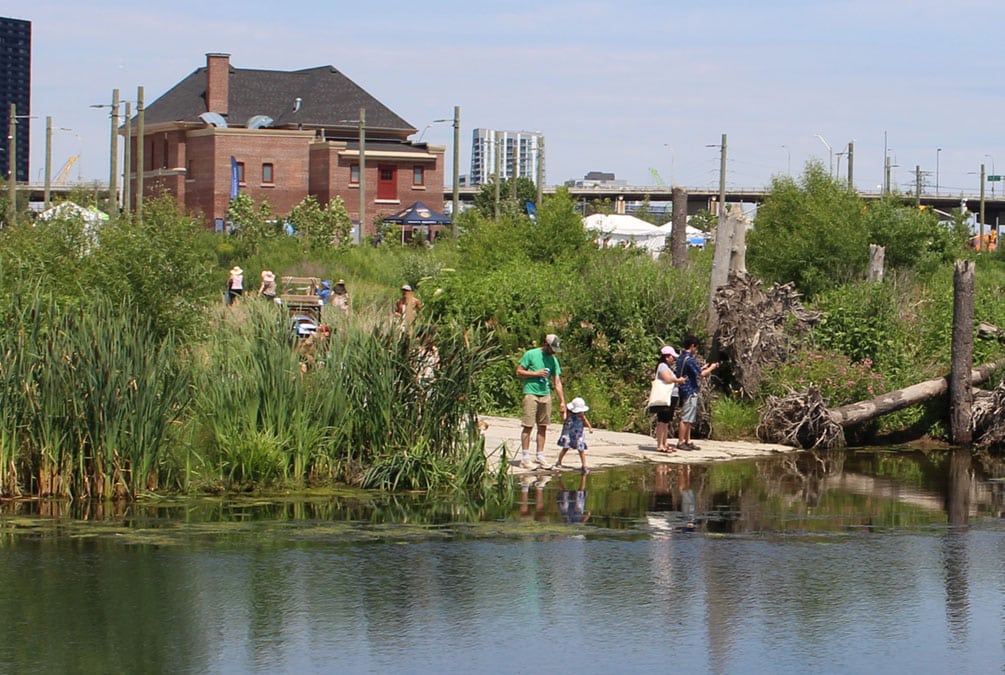
Restoring Urban Ecosystems: The Role of Connectivity
How can a restored landscape help repair the relationship between people and nature?
By Saloni Dagli, PE, Environmental Engineer (Washington, DC), Craig Taylor, PE, Hydraulics and River Rehabilitation Specialist (Oakdale, MN), Tim Dekker, PhD, PE, CEO & President (Ann Arbor, MI), and Michelle Platz, PhD, Environmental Engineer (Ann Arbor, MI)
April 6, 2026
We began our urban ecology article series by introducing three core elements or guiding principles that seem to be common across our most challenging and successful urban restoration projects. Physical, biochemical, and ecological function; structural and process complexity; and connection, both ecological and human, are all basic elements of any successful ecosystem restoration, and they map directly to our work in urban ecosystems. We conclude this series with some thoughts on connectivity, specifically how a restored landscape can help repair relationships between people and nature.
The Connection to Nature
Many cultures around the world have deep connections to the earth, with traditions rooted in reciprocity, ecological caretaking, and the mutual flourishing that comes from being in relationship with nature. If those concepts feel foreign to you, you aren’t alone. Reciprocal relationships with nature can be difficult to realize in Western society, where attitudes are often transactional and extractive, and urban spaces can make nature feel abstract and distant.
“Each person, human or no, is bound to every other in a reciprocal relationship.” – Robin Wall Kimmerer
Robin Wall Kimmerer, a leader in the environmental field, a scientist, and member of the Citizen Potawatomi Nation, teaches that humans have a mutual responsibility towards our non-human kin. Seeing ourselves as separate from our environment is a dangerous mindset and a root cause of our present environmental crisis. Kimmerer advocates for healing our relationship with the natural world. Her work shows us that all ecological flourishing depends on highly mutual relationships, and humans have a role in an ecosystem when we approach it with intention and humility.
Integrating Connection into Urban Restoration
What does LimnoTech, as a private company – very much rooted in our Western transactional society – have to contribute in this space? Our restoration work seeks to be a step in the direction of healing our relationships with nature. It isn’t easy. We ascribe to the beliefs described above (i.e., reciprocity, mutual flourishing) and orient our restoration practice around these ideals, even if they often feel largely aspirational. A big part of this is advocating for community input to drive design choices in nature-based solutions, even when it slows down an already slow process. We think it’s worth doing because we believe it ultimately results in more successful urban restoration outcomes for the environment and communities.
We believe that people have an innate connection to nature, even in the most urbanized spaces, and that encouraging that connection is directly linked to other aspects of well-being. We recognize that people may be at very different places in their level of connection with nature and believe in meeting people where they are. People have knowledge about the places they live and the nature around them. They may not reveal this knowledge using the same frameworks scientists and engineers do, and may never have had the opportunity to express their thoughts. Taking the time to make space for sharing this knowledge is worth the extra effort because the simple act of stating it out loud kickstarts a journey towards reciprocity.
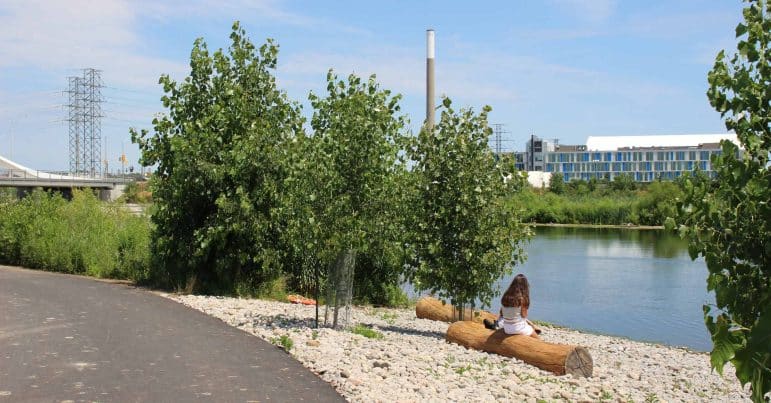
We see the restoration projects we work on as a small step toward starting those conversations and a beginning to repair relationships with nature. Creating access to nature in urban spaces creates proximity, opportunities to engage people in the planning process, and the potential for people to tap into that innate connection with nature and grow from there.
A Place for Community Engagement
The planning process provides a unique opportunity for people to engage with nature and set the stage for future engagements that will be meaningful to their community. Like people’s connection to nature, community engagement can take many forms, from simple signage and surveys to community forums and visioning committees.
For the Historic Congressional Cemetery green infrastructure planning project in Washington DC, the engagement process involved recruiting a diverse group of community members and investing in their knowledge about green infrastructure. We developed a series of workshops that included a boat tour of the Anacostia River, a green infrastructure walking tour, and a participatory mapping activity.
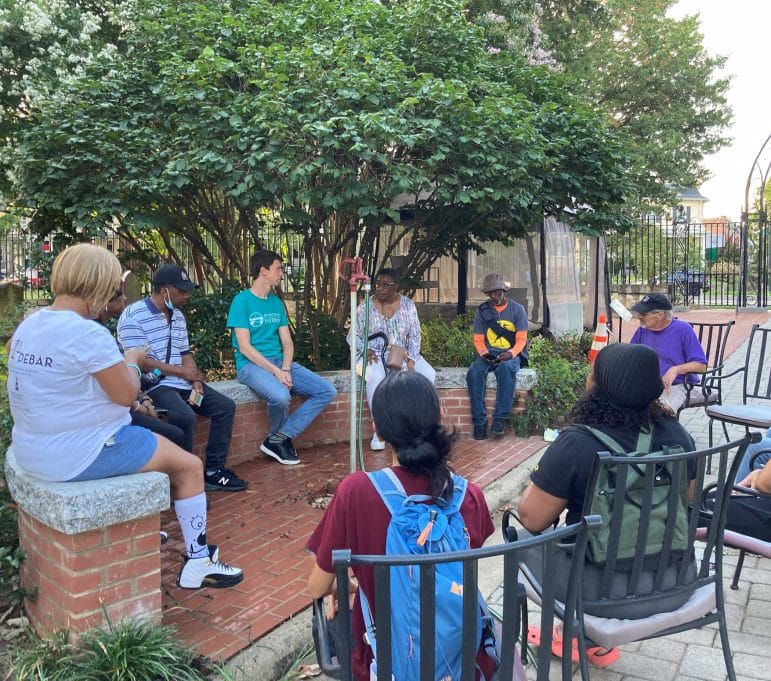
The workshops also allowed participants to explore their relationships with the green space around them, articulate their preferences, and translate their ideas into green infrastructure design. By the end of the workshop, community members could identify aspects of beloved existing green spaces and translate them into desired benefits for new green infrastructure, such as a sense of peace, aesthetic beauty, and habitat for birds and pollinators. Participants developed creative green infrastructure concepts for the cemetery and came away energized about enhancing access to nature elsewhere in their communities.
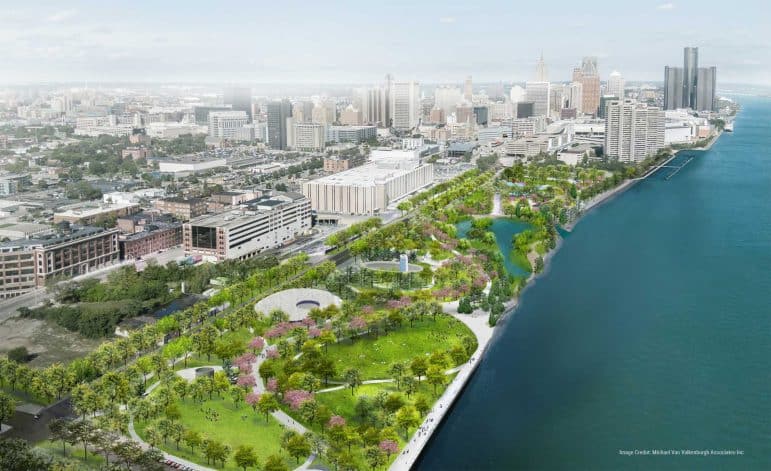
The visioning and design of Ralph C. Wilson, Jr. Centennial Park in Detroit, MI, took these concepts to a new level. The engagement team assembled a team of community advisors, including council members, clergy, community activists, long-term residents, and high school student leaders. These thought leaders were tasked with creating a vision for the park.
To facilitate the visioning process, the community advisors were flown to urban waterfront parks in New York, Philadelphia, and Chicago to assess how various strategies for connecting with nature might work for their community. Our conversations with them were filled with inspiration from other notable city parks, and also recollections of a walkable, bikeable Detroit that existed years ago. Through this process, the team of community leaders took ownership of the design, and our role as restoration practitioners was strongly shaped by their vision.
The Washington, DC, Department of Energy and Environment (DOEE) took a higher-level approach in their Wards 7 and 8 MS4 Permit Program Engagement Strategy. This project focused on community-scale stormwater management and green infrastructure implementation, rather than individual projects. We formed a community advisory committee and engaged the public at several community events to understand existing attitudes towards green infrastructure and identify ways the City’s stormwater programs could better serve Wards 7 and 8. The preferences that emerged from that process spoke to the community’s deep understanding of how green space can impact people’s well-being and a desire to improve access to nature and the quality of life for community members of all ages.
Engagement creates an opportunity for communities to define what a meaningful connection to nature is for them.
In all of these cases, we found that the engagement process itself can be a step towards reorienting community relationships to nature in their immediate surroundings. In each setting, we encountered an innate desire to connect with nature, and found that the emotional connection with nature emerges rapidly when given space to do so.
Incorporating Connection in Practice
Connecting with nature takes many forms, and our restoration designs provide many avenues to facilitate this connection. Our goal is to connect closely to where people are: where they live and wherever they are on their engagement journey. The Waterloo Greenway and Waller Creek restoration project is one example of a site with many levels of access to nature.
The Greenway connects the well-loved and well-traveled Buttler Trail along Lady Bird Lake to the heart of downtown Austin, TX. A commuter using the trail will have opportunities to immerse themselves in green passages and to be exposed to stunning creek views that are completely novel in their urban setting. Creek riffles have been designed to accentuate creek sounds under the footbridges, providing a counterpoint to the urban noise just outside the corridor.
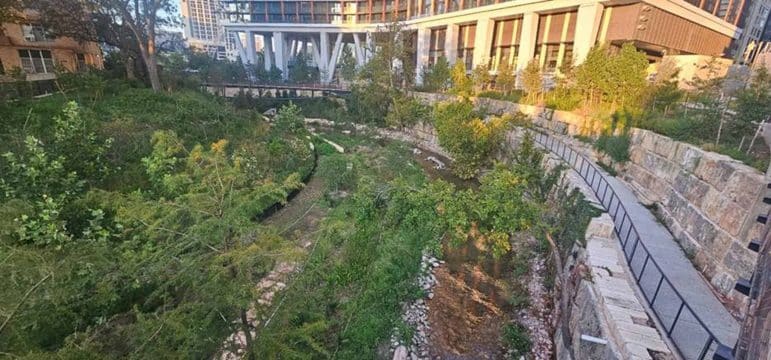
For those interested in a more leisurely experience, seating and plantings have been strategically placed to take advantage of shade and the natural breezes through the corridor. The creek corridor has become a desired location for wildlife viewing. Fish are always visible near the large wood habitat features, and during the baitfish spawn, there are literally thousands of fish visible from the Hartman Bridge. Turtles are often found sunning themselves on floating logs near the creek delta, and Brutus, a crowd favorite, can frequently be spotted within the 4-block reach near Palm Park. The Greenway is also an excellent location for bird watching. One of our authors, Craig Taylor, has spent hours watching his favorite egret foraging in the habitat he helped design.
For parkgoers looking for a more active way to connect, there are art shows, kayaking, fishing, concerts, opportunities to dip your toes in the water, and an outdoor classroom where the Waterloo Greenway Conservancy hosts programs to teach about nature. Most importantly, all of these opportunities are within blocks of people’s homes, who would otherwise have to travel miles to have a similar experience.
In other urban restoration projects, we have worked to create access via:
- Canoe safaris (Don River, Toronto, ON)
- Trout fishing overlooks (Hartley Park, Duluth, MN)
- Cable ferry and water play (Harrold Simmons Park, Dallas, TX)
- Wading stream (Urban Oasis, Middle East)
- Community lakes (Grand Park Lake, Frisco, TX)
- Community-led green infrastructure (Anne Arundel & Prince George’s Counties, MD).
Mutual and Reciprocal Relationship between Communities and Nature
In our urban restoration design work, both in the process and in the outcome, we seek to create opportunities for a more mutual and reciprocal relationship between communities and the nature they inhabit. Each project may be a small step, but it’s our hope that our approach encourages communities to take the next step in deepening their relationship with nature, as it does its important and complex work.
This brings us full circle to where we started in this series, focusing on the core elements of successful restoration work: physical, biochemical, and ecological function; structural and process complexity; and connection, both ecological and human. It’s work we’re excited to be part of, along with the opportunity to collaborate with our many partners who share our vision for nature-based restoration.
If you want to learn more about LimnoTech’s approach to bringing urban ecology into the built environment, reach out to Saloni Dagli at sdagli@limno.com, Craig Taylor at ctaylor@limno.com, Tim Dekker at tdekker@limno.com, and Michelle Platz at mplatz@limno.com. You can also learn more about LimnoTech’s restoration practice area and work by checking out our Urban Ecology & Naturalization and Waterway and Ecosystem Restoration pages.
This article on the role of connection in restoring urban ecosystems is the fourth in a series of articles authored by LimnoTech staff on urban ecology. The first article introduced LimnoTech’s approach to bringing nature into the built environment, which is based on the three guiding principles of Function, Complexity, and Connection. In the second article, the approach to restoring function in urban ecosystems was explored. The third article delved into the role of complexity in urban ecosystem restoration. In this final article in this series, we described the last guiding principle of connection, with examples of projects, partnerships, and lessons learned along the way.
Links to the other urban ecology articles in this series are provided below:
Urban Ecology – Bringing Nature to the Built Environment
Restoring Function in Urban Ecosystems
Restoring Urban Ecosystems: The Role of Complexity
Follow us on LinkedIn and check the Insights & Perspectives page on our website for more information and updates.
Saloni Dagli, PE, is an Environmental Engineer at LimnoTech. Saloni’s areas of expertise include environmental justice, stormwater management, green infrastructure, resiliency, and restoration. She has provided project management, GIS, data management, and design support for several green infrastructures, stormwater management, and habitat restoration projects. Saloni has developed innovative approaches to promoting environmental justice, rooted in science and guided by communities. She is also a Just Communities Accredited Practitioner and a Certified Chesapeake Bay Landscape Professional. Saloni has helped clients translate their values into meaningful water stewardship action, facilitated decision-making and collaboration within large organizations, and supported clients’ stakeholder outreach and engagement efforts.
Craig Taylor, PE, is a Hydraulics and River Rehabilitation Specialist with over 15 years of professional experience in restoration design, physical hydraulics, sediment transport, and stormwater modeling. Craig thrives in collaborative, multidisciplinary teams, taking on environmental restoration and stormwater projects. He has conducted extensive research on stormwater management techniques and has served as a technical leader on over two dozen urban river restoration projects. His skills and expertise include physical and numerical modeling, channel morphology, scour assessment, armoring design, ecological flow regimes, storm sewer networks, and riparian restoration. Craig serves as an instructor in the University of Virginia’s Landscape Architecture graduate program, and he holds a Stream Restoration Certificate from the University of Minnesota.
Timothy Dekker, PhD, PE, is the President and CEO of LimnoTech. Tim is an Environmental and Water Resources Engineer with expertise in urban stormwater management and urban waterway remediation and restoration. Tim has led scientific studies and projects throughout North America, describing the dynamics of surface water, sediments, and groundwater systems, assessing and mitigating the effects of urban flooding, and developing urban stormwater and CSO control strategies. Tim has contributed to successful national design competitions and projects focusing on restoring and revitalizing urban waterfronts. He brings an integrative approach to problem-solving that blends science and engineering with highly collaborative, multidisciplinary design and planning. Tim has served as a lecturer and adjunct professor of environmental engineering at the University of Michigan and is a regular lecturer and studio critic at the Harvard University Graduate School of Design.
Michelle Platz, PhD, is an Environmental Engineer specializing in aquatic ecosystem restoration planning and design, as well as developing ecosystem recovery monitoring frameworks to evaluate habitat-level impacts of restoration interventions in freshwater and marine environments. Michelle brings expertise in ecological engineering, specializing in the application of nature-based solutions and community-engaged project development to enhance the resilience of Great Lakes coastal cities to climate change-related challenges. Michelle leads the biological sciences, ecosystem services, and fisheries service practice areas at LimnoTech and has experience working in transdisciplinary teams, including academic, non-profit, municipal, and federal groups.